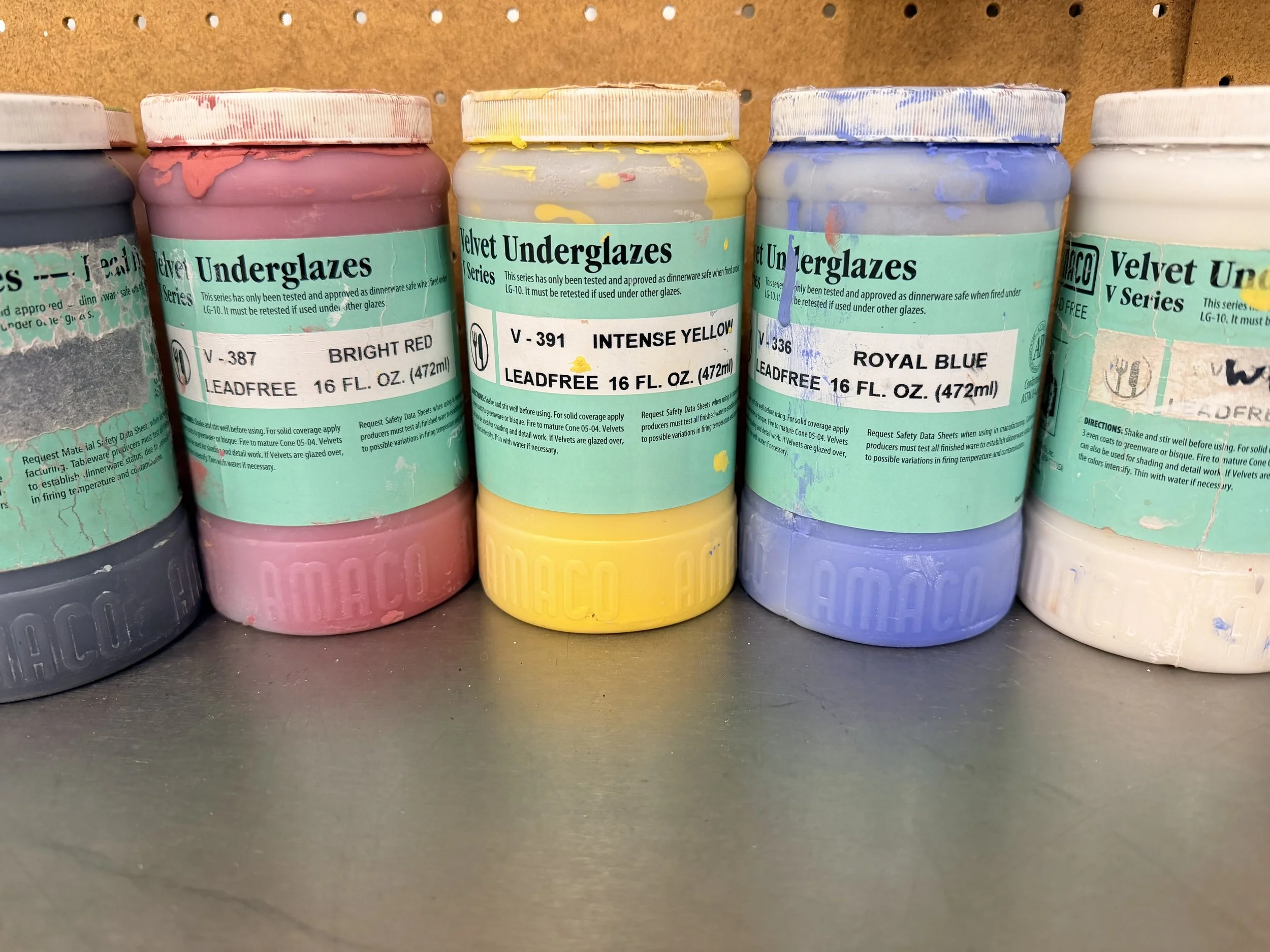
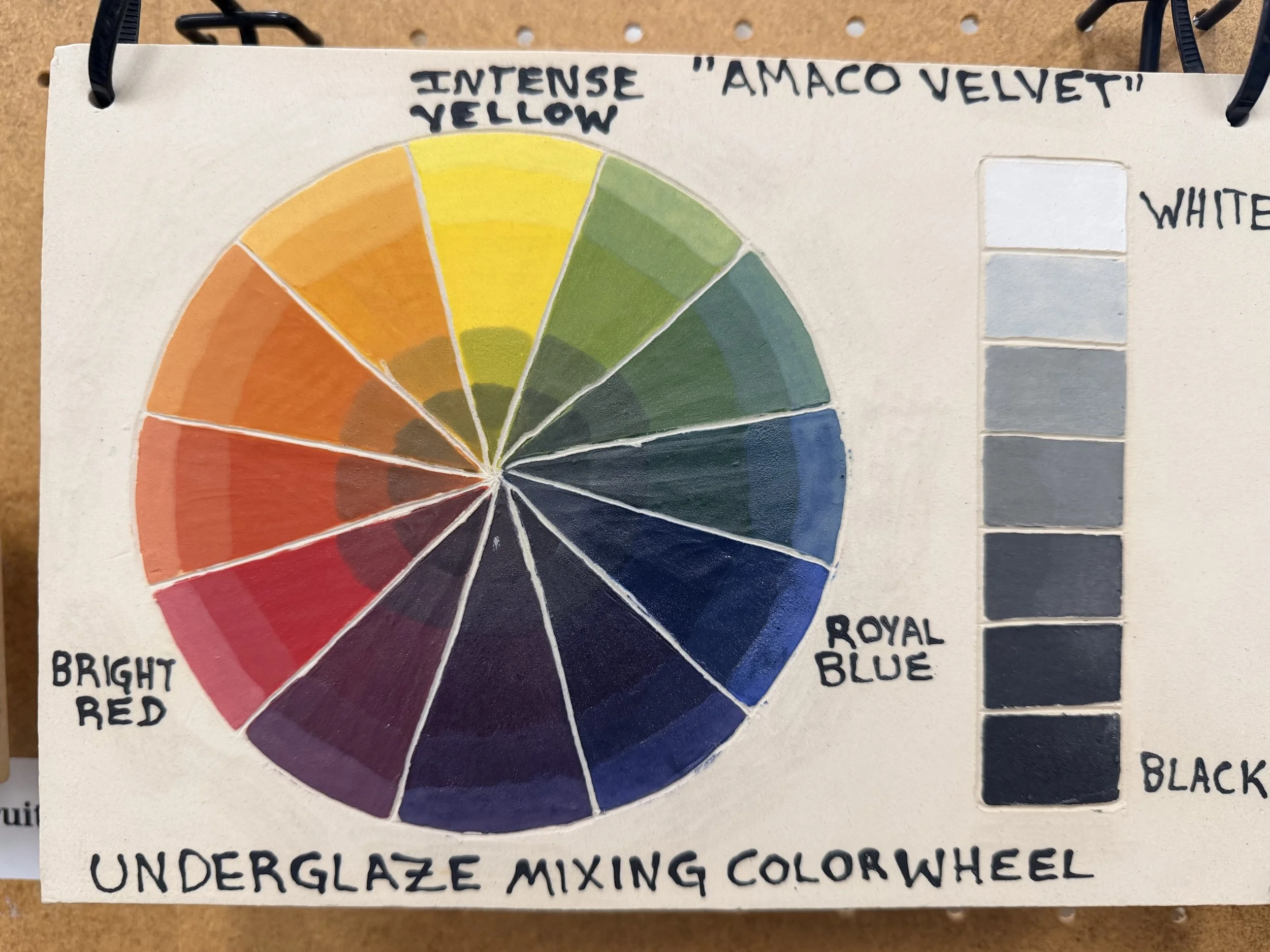
Underglazes can also be mixed like acrylic or oil paints, allowing you to blend custom hues and create your own palette. You can lighten, darken, tint, or tone colors in ways that aren’t possible with glazes.
This makes underglazes ideal for:
What Is Glaze?
Glaze is essentially a thin layer of melted glass that fuses to the clay body during firing. It’s made from a blend of silica (the glass former), fluxes (which lower the melting point), alumina (which adds stability and prevents the glaze from running too much), and various colorants or opacifiers to achieve different surfaces and effects.
When fired to cone 5, glaze melts into a smooth, continuous coating that:
seals the pores of the clay body
creates a more water-tight, impervious surface
can be glossy, satin, or matte depending on the formula
increases durability and makes functional ware easier to clean
How Underglaze and Glaze Work Together
If you want your underglaze design to be shiny, apply a clear glaze after bisque firing. The clear coat brightens color, adds durability, and creates a sealed surface.
However:
Underglaze without clear glaze is still functional
It remains slightly porous and matte, but is still safe to use — many potters intentionally leave the outside of their pieces unglazed for a soft, tactile texture.
Underglaze with clear glaze becomes sealed and glossy
This is ideal for any surface that will hold water or for surfaces that you want to wash more easily.
Studio Recommendation
Always glaze the inside of functional ware used for food or drink
Always glaze the inside of vases or anything meant to hold water
The outside of pieces can be underglaze-only and still perfectly usable
Important Note for Our Studios
When using Amaco Velvet Underglazes, we recommend the
Zinc-Free Brushing Clear instead of our studio-made dipping clear.
The zinc-free formula produces more consistent, predictable results and prevents color shifts or unexpected textures on Velvets.
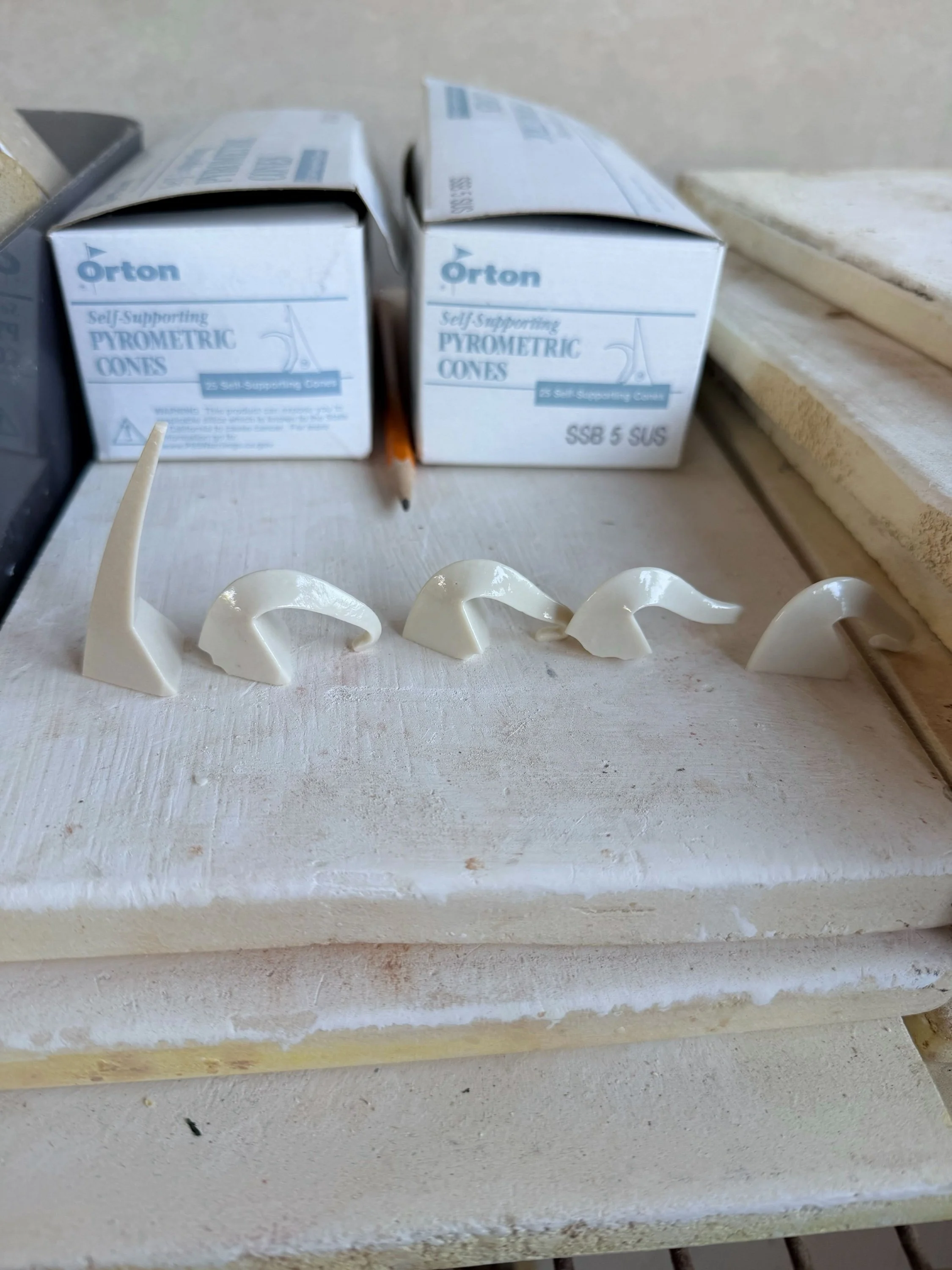
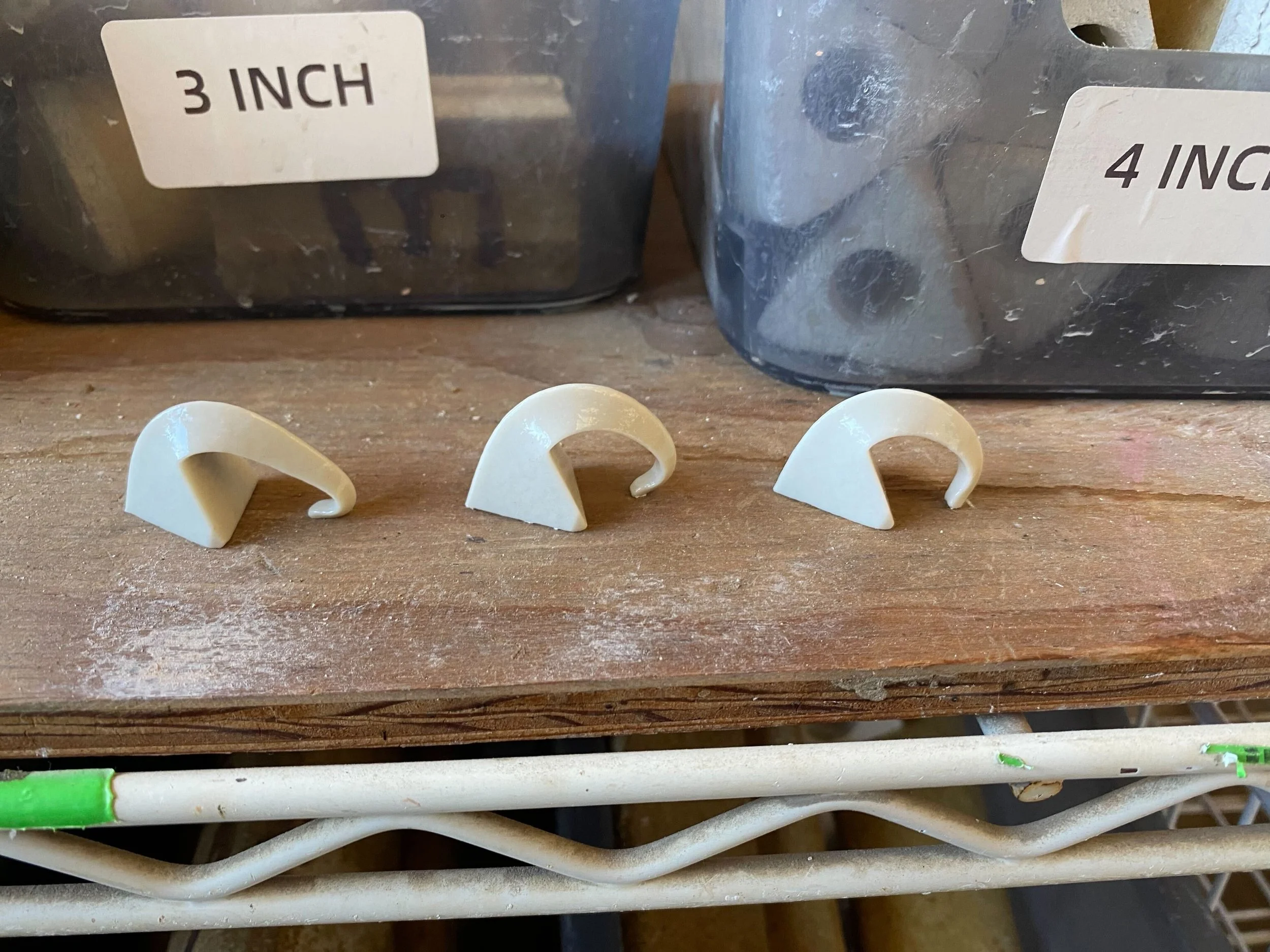
How Underglaze Behaves at Cone 5
Most major underglaze brands hold up beautifully at cone 5. You can expect:
A few colors (especially pinks, purples, and bright reds) may shift depending on pigment chemistry, but overall underglazes are highly dependable at mid-range.
Why and When to Use Glaze Instead of Underglaze
Use glaze when you want:
a sealed, non-porous surface
a shiny or satin finish
a functional interior surface
melted, glassy texture
you like the look of the dipping and pouring glazes
you aren’t interested in painting or illustrative surfaces on your work and prefer how dipping, pouring and brushing glazes behave on the surfaces.
Use underglaze when you want:
precision
line work
illustration
mixed colors
painterly marks
sgraffito or mishima
stable, non-moving color
Many artists use both — glaze for function, underglaze for expression.
Final Thoughts
Underglaze and glaze each bring something different to the ceramic process. Underglazes give you precision, mixable color, and painterly control. Glazes give you shine, sealing, and the glassy finish associated with functional pottery.
Understanding how both materials behave at cone 5 — and how to combine them effectively — opens up a world of creative possibilities. If you ever want help choosing materials or exploring new techniques, I’m always here to support your process.